
Introduction
In 1954, Reverend Cary Daniel of First Baptist Church in West Dallas, TX declared: “If you want Scriptural authority for desegregation you will just simply have to write another Bible.” [1] Rev. Daniel was preaching a sermon in response to the Brown v. Board of Education ruling which determined that racial segregation in public schools was unconstitutional. Daniel later published his sermon, titled “God the Original Segregationist”, in which he argued that the biblical narrative fully supports segregation of the races and that God’s intent and design, from the beginning of creation, was to keep the races separate from one another. The vast majority of modern Dallas Christians hear those words and are disgusted (as they should be!). However, most are unaware that Daniel’s worldview was not only the dominant view of his time but continues to shape the city in which they live. More haunting than the outlandishly racist rhetoric, spewed throughout the entirety of the sermon, is Daniel’s closing argument: “The Southern white people generally are among the strongest segregationists in the world, and yet (not in spite of that fact but because of it) they have earned the unquestioned distinction of being by far the greatest friends and benefactors the Negroes have ever had.” [2] Dallas is a city shaped by generational racism at the hands of White Christians who, under the guise of Southern hospitality, continue to ignore the plight of their Black neighbors. By using and abusing Scripture, Christians are able to justify the sins of idolatry and partiality, calling it God-ordained. To be clear, the Bible does not justify segregation or racism of any kind. The biblical narrative casts a vision of human flourishing that encompasses all races, nations, and cultures; not separated from one another, but joined together in a colorful family. From the beginning of the cosmos to its eschatological end, God’s heart is for the restoration of humans to himself and to one another. Racial reconciliation and racial unity are essential to the Christian life. A Christian worldview without it is not only impoverished but perverted. In what follows, I will explore the mission of reconciliation throughout scripture, the command for the Church to be ministers of reconciliation, and the challenges and opportunities of the city of Dallas, Texas as a mission field. Though this paper is brief, my hope is that this would be a starting point for those looking to learn more about racial reconciliation and how to embody it in a holistic and authentic way.
The Mission of Reconciliation
In the beginning, God created the cosmos. From the birds in the sky to the fish in the sea, and everywhere in between, order was established within the created world. Humans, the crown of all creation, were created in the image of God (Genesis 12:3) to tend and cultivate the earth. However, the humans chose to rebel, causing distortion to enter the world which resulted in a broken relationship with God. The choices of the first humans not only separated themselves from a loving God but created division and disharmony between one another. Nevertheless, God did not abandon the humans and promised to send the Great Reconciler to save them from themselves. Eons passed when, one day, God spoke to a Mesopotamian man named Abram and made a covenant with him. Renaming him Abraham, God promised to make him into a great family which would ultimately bless “all the families on earth through him” (Genesis 12:3). [3] This blessing would be the reconciliation of all peoples to the one true God and the restoration of creation. The theme of reconciliation is found throughout the Old Testament and “should be understood as the divine initiative to bring about the reconciliation and restoration of creation through God’s chosen people, Israel.” [4] Ultimately, God chose a family as his instrument of cosmic redemption. However, God’s chosen family fell into sin like their neighbors and used their election as a weapon. Throughout their history, Israel would struggle in their mission to be a blessing to the other families of earth. God frequently used prophets to remind the family of Israel of “the inclusive nature of God’s kingdom, where people from every nation are welcomed into His presence.” [5] Prophets like “Isaiah, Jonah, and Micah provide a universal offer of salvation, hope and redemption to all people, regardless of nationality or background.” [6] Israel did not always listen to the prophets and struggled to fulfill their mission. God responded with 400 years of silence. After years of waiting, the Great Reconciler, foretold in Genesis 3, was born. As Derwin Gray explains:
God has always longed to have a single, worldwide, multi-national, multiethnic family of coheirs and equals in Christ, who love him by loving each other. At the heart of ethnic reconciliation is God’s heart for the reconciliation of people and creation. God’s gospel has created and secured our reconciliation with him and each other across ethnic barriers. Jesus, “the visible image of the invisible God,” calls us to reconciliation. [7]
God, “by assuming human form, […] demonstrated that since the fall of Adam, or even prior to it, he was committed to reconciling humans to him through the initiative of salvation that was implemented by Christ.” [8] Jesus Christ is the embodiment of reconciliation. In Matthew 22:36–40, he outlined the greatest commandments: love God with everything you are and do and love your neighbor as yourself. Jesus lived out the mission of reconciliation that began in Genesis and casts the vision for how people of all nations can join God’s family: the Church. In Ephesians 2:11–22, “the Church [is assigned] the roles of preaching and living out the vertical (God’s reconciliation with humans) and horizontal (human to human reconciliation) reconciliation in the world, as accomplished by the redemptive work of Jesus Christ.” [9] Revelation 7:9 gives a glimpse of the end result of this mission, where “a vast multitude from every nation, tribe, people, and language, which no one [can] number, [stands] before the throne and before the Lamb.” [10] From the beginning of creation, God’s plan has been for all people to be reconciled to him and to one another, unified in their beautiful diversity.
Christians as Ministers of Reconciliation
Christians have a vital role to play in God’s mission of cosmic redemption. Through the working of the Holy Spirit, Christians are empowered to be ministers of reconciliation among the peoples of the earth, not only reconciling relationally but by being the physical embodiment of the Kingdom of God through the power of Jesus Christ. Christians are not to isolate from the world, waiting for Heaven, but to engage with it. Paul, “saw great urgency in living in the way of Christ in the here and now, and great benefit in growing up in Christ as we form our communal lives into [..] “small working models” of Christ’s kingdom.” [11] This mission of reconciliation is not only vital to the Great commission but essential for the witness of the Church to a weary world (2 Co 5:17–19). As Rev. Dr. Malcom Foley explains, “the kingdom of God has broken in. Light has pierced the darkness. An alternative logic has asserted itself into a hostile, oppressive, and exploitative world.” [12] As members of this ‘now and not yet’ kingdom, Christians partner with God in the mission of reconciliation. As Gray explains, “[God] wants to reconcile humanity to himself vertically and humanity to each other horizontally” [13] which can be symbolized in a cross. This image is a helpful reminder of Christians’ call to be ministers of reconciliation. [14]
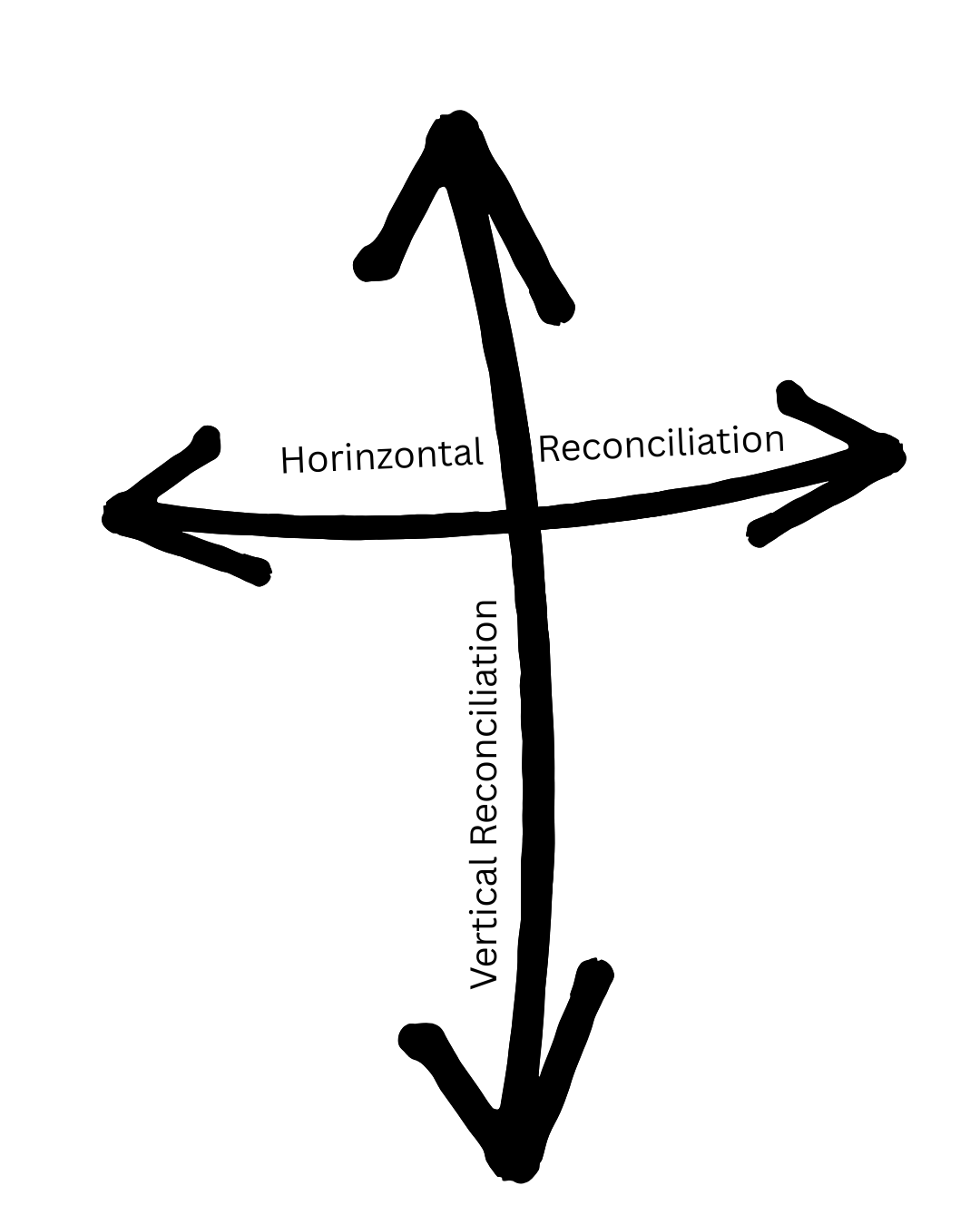
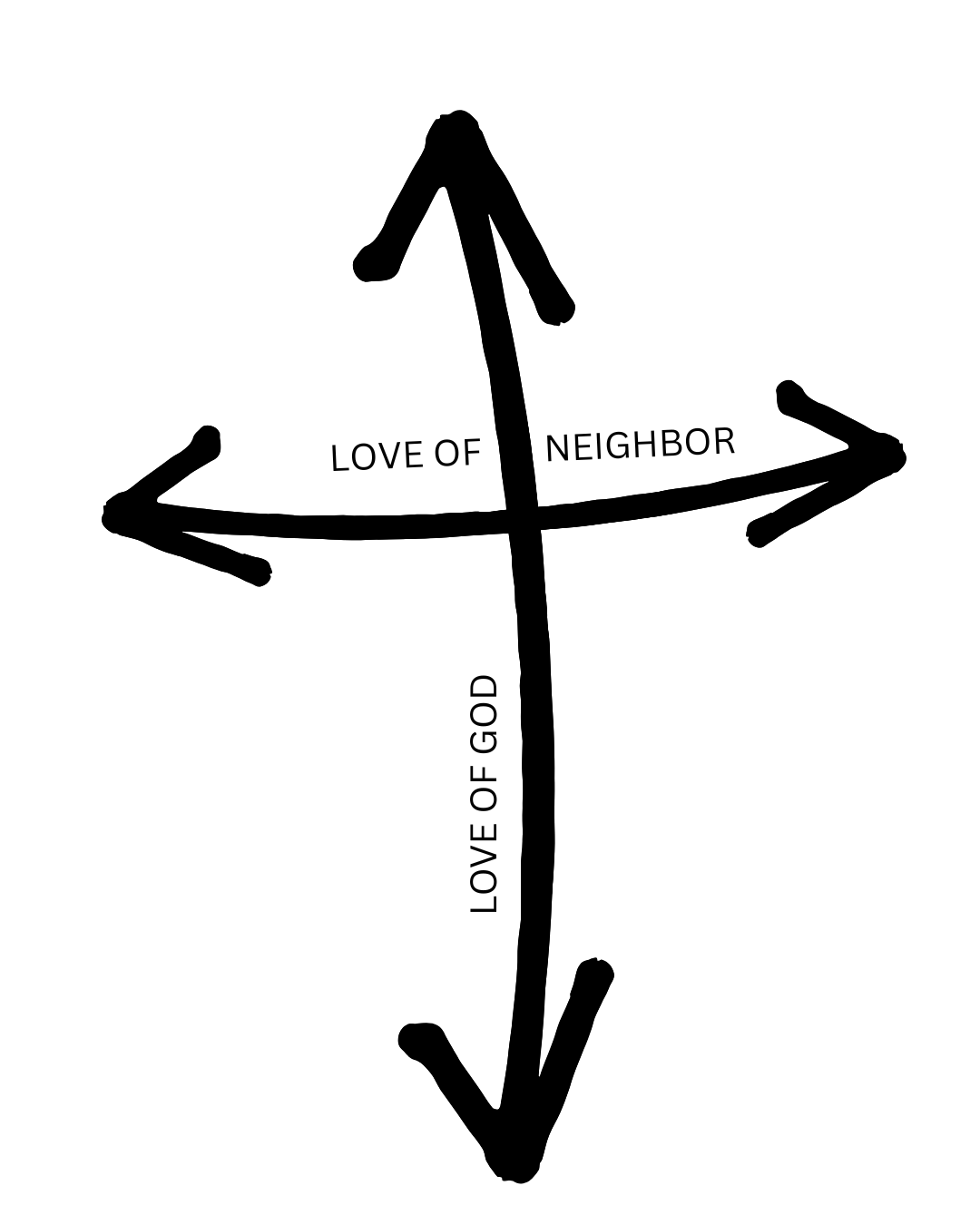
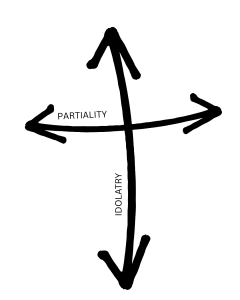
Jesus’ explanation of the greatest commandments in Matthew 22:36–40 aligns accordingly: vertical reconciliation correlates to love of God and horizontal reconciliation correlates to love of neighbor. The two primary barriers to these commandments are the sins of idolatry and partiality. In the Old Testament, the sin of idolatry “is not merely the worship of false gods; it represents a fundamental distortion of the divine image and a disruption of Israel’s mission.” [15] For Christians, the sin of idolatry occurs whenever allegiance is given to anything or anyone other than God. It occurs when love of God is no longer the foundation of one’s worldview which will affect how Christians view the world and the people around them. In the book of James, James explains the importance of this cross-shaped reality to the church, emphasizing that Christians are called to not just to hear the Word, but to do what it says. In his commentary on James 1, Daniel K. Eng explains that one James’ “emphasis on doing the word (Jas 1:22-25) continues . . . in two areas of life: “to care for orphans and widows” and “to keep oneself unstained from the world.” [16] Loving God and following his Word have explicit social implications. One’s posture toward God will affect one’s posture toward the rest of creation. James continues on to warn his readers of the sin of partiality. In 2:1-13, he addresses Christians in the community who are showing favoritism to the rich and dishonoring the poor. James reminds them that if you “love your neighbor as yourself, you are doing well. If, however, you show favoritism, you commit sin and are convicted by the law as transgressors. (James 2:8-9)” Ultimately, partiality “perpetuates the injustice faced by those marginalized in society: the poor, the weak, and minorities.” [17] However, the biblical narrative calls Christians to reject the hierarchical cultural norms of the world and embrace God’s vision of family, where there is no segregation. Racism and discrimination exist at the intersection of idolatry and partiality, “constricting our theological and ethical imagination.” [18] They result from having a distorted view of God’s creation (his image bearers) and not seeking their flourishing. Therefore, racial reconciliation is a gospel imperative. When Christians segregate themselves from other believers because of skin color or other forms of socially constructed hierarchies, they are rejecting their role as ministers of reconciliation and choosing to live a life distorted by sin. Christians are called to break down the walls of hostility in the world (Ephesians 2:14) and to embody vertical and horizontal reconciliation in their communities. In the words of Michael Gormon: “The goal of human existence . . .is to participate now and forever, individually and corporately, in the very life and character of [the] cruciform, missional, world- redeeming God of righteousness and restorative justice.” [19] The mission of reconciliation is the vocation of all Christians and essential to embodying the kingdom of God.
Dallas as a Mission Field
Living missionally requires that Christians know their mission field. The city of Dallas offers unique challenges and opportunities for reconciliation and requires intentionality. In Foley’s book, The Anti-Greed Gospel, he challenges Christians to embody racial reconciliation in their communities by employing these three actions: prophetic truth telling, deep economic solidarity, and creative anti-violence. Telling the truth means taking an intentional and honest look at how the sins of White Christians have directly affected the structure and systems of Dallas, Texas. When Rev. Daniel gave his sermon in 1955, racism had already created a deeply rooted system of violence, oppression, and exploitation in the city. Due to the brevity and scope of this paper, it is impossible to give an in-depth history. However, White Christians need to know that Dallas is a city which thrives on the myth of its own exceptionalism and southern hospitality, suppressing the truth of its violent and exploitative history. [20] We need to know that in the spring of 1922, the Ku Klux Klan “was credited with the floggings of eighty-six human beings … at a special “whipping meadow” on the Trinity River bottom.” [21] We need to know that the city intentionally redlined minority neighborhoods and stripped black citizens of their homes and land. We need to know that, as America’s second most segregated city, the very neighborhoods in which we live are predetermined by racism and greed. [22] We need to know the names of the local White pastors (W.A. Criswell, Carey Daniel, Ralph H. Langley, etc) who consistently promoted segregation and championed decades of political and economic oppression of their minority neighbors. [23] We need to know that Dallas public schools were not fully integrated until 1983 after being forced by the U.S. Supreme Court. [24] My hope in sharing these examples of racism is not to bring shame upon my fellow brothers and sisters in Christ. My hope is to bring light into the darkness and give tangible examples of how sin has impacted our city. By telling the truth, Christians are able to make space for lament and repentance which are essential for restoration and repair. Because Dallas is a city that is physically segregated due to systemic racism, Christians will need to embody economic solidarity by moving their physical bodies into proximity with their Black neighbors. “Proximity creates intimacy” and we cannot love our Black neighbors if we do not see or know them. [25] This may look like moving into a more diverse neighborhood, enrolling your child into a more diverse school, joining different churches, or changing the stores and restaurants you patronize. Ultimately, “love requires relationship. Patience requires people to be patient with. Service requires other people to serve” and reconciliation requires people to be reconciled with. [26] Lastly, it is essential to practice creative anti-violence which Foley defines as “seek[ing] our neighbors’ good, flourishing, and prosperity.” [27] Christians can do this by resisting the “many manifestations of violence that economic exploitation and political domination require: homelessness, poverty, hunger, thirst, and war.” [28] Creativity is required as each person seeks to love their neighbors in the unique context God has placed them. As a mission field, Dallas is ripe for reconciliation opportunities but, together, Christians can live in creative missionality, seeking the flourishing of their neighbors and their communities.
Conclusion
Learning about the pervasiveness of sin can be overwhelming. However, as Christians, we are told not to despair. We are a people of hope because we know how the mission of reconciliation ends. As we are promised in Revelation 21:3-4, there will come a day when “God’s dwelling is with humanity, and he will live with them. They will be his peoples, and God himself will be with them and will be their God. He will wipe away every tear from their eyes. Death will be no more; grief, crying, and pain will be no more, because the previous things have passed away.” There will come a day when racism, oppression, and exploitation will be no more and when all peoples will be reconciled to one another and to God. Until this day of cosmic redemption comes, Christians have the honor of creating small glimmers of it in the here and now. We have the task of showing a weary world what the Kingdom of God looks like: “a realm where justice, peace, and joy are the marks of the culture and the character of how people live.” [29] As Kaitlyn Schiess prophetically proclaims:
We tend to look around at our churches, see harmony and peace within the relatively homogenous group, and think we’re doing all right when it comes to scriptural commands to seek unity and oppose discrimination. What we fail to recognize is that our churches are often the result of fragmentation, not at all the solution to it. [30]
The biblical narrative shows us what that solution is: a people unified in Christ and to one another. As Christians, “the logic of the kingdom of God compels us to think personally, communally, and cosmically.” [31] We must show the world a kingdom where the things that sin has used to divide us are instead celebrated. As ministers of reconciliation, Christians have the duty and responsibility to oppose the segregation of our lives, our churches, and our communities and walk in the light of the kingdom to come.
Footnotes
[1] Carey Daniel, God the Original Segregationist, 1955, Box 4, Folder 2, M393 William D. McCain Pamphlet Collection, Civil Rights in Mississippi Digital Archive, University of Southern Mississippi Libraries, accessed April 15, 2026, https://digilib.usm.edu/cdm/ref/collection/manners/id/31, 6.
[2] Daniel, God the Original Segregationist, 8.
[3] Victor Umaru, “Missiological Exploration of Old Testament Foundation for the Great Commission,” Evangelical Review of Theology 49, no. 2 (2025): 161.
[4] Umaru, “Missiological Exploration of Old Testament Foundation for the Great Commission,” 160.
[5] Umaru, “Missiological Exploration of Old Testament Foundation for the Great Commission,” 164.
[6] Umaru, “Missiological Exploration of Old Testament Foundation for the Great Commission,” 164.
[7] Derwin L. Gray, How to Heal Our Racial Divide: Challenges, Hopes, and a Helpfully Hopeful Path Forward (Carol Stream, IL: Tyndale Momentum, 2022), 29.
[8] Christopher Magezi, “The Church as God’s Agent in Uniting Immigrants and Natives: A Case from Ephesians 2:11-22.” Verbum et Ecclesia 43, no. 1 (2022): 4.
[9] Magezi, “The Church as God’s Agent in Uniting Immigrants and Natives,” 1.
[10] All Bible references will be from the Christian Standard Bible (Nashville, TN: Holman Bible Publishers, 2020).
[11] This concept is explored in N. T. Wright, Simply Christian: Why Christianity Makes Sense. San Francisco: HarperSanFrancisco, 2006. Referred to in Nijay K. Gupta, Paul for the World: A Grounded Vision for Finding Meaning in This Life—Not Just the Next (Grand Rapids, MI: Brazos Press, 2026), 67.
[12] Malcolm Foley, The Anti-Greed Gospel: Why the Love of Money Is the Root of Racism and How the Church Can Create a New Way Forward (Grand Rapids, MI: Brazos Press, 2025), 224.
[13] Gray, How to Heal Our Racial Divide, 158.
[14] Images created by the author.
[15] Umaru, “Missiological Exploration of Old Testament Foundation for the Great Commission,” 162.
[16] Daniel K. Eng, “James,” in The New Testament in Color: A Multiethnic Commentary on the New Testament, ed. Esau McCaulley et al. (Downers Grove, IL: IVP Academic, 2024), 643.
[17] Eng, “James,” 644.
[18] Foley, The Anti-Greed Gospel, 68.
[19] Michael J. Gorman, Becoming the Gospel: Paul, Participation, and Mission (Grand Rapids, MI: Eerdmans, 2015), 5. As quoted in Gupta, Paul for the World, 83.
[20] The original publishing of Jim Schutze’ The Accommodation was suppressed by the political establishment immediately after its publication in 1986. See Rob Madole, “What Did Dallas Learn from Rediscovering a Suppressed Book?” Los Angeles Review of Books, December 17, 2021, https://lareviewofbooks.org/article/what-did-dallas-learn-from-rediscovering-a-suppressed-book/.
[21] Jim Schutze, The Accommodation: The Politics of Race in an American City (Dallas: Deep Vellum, 2021), 80.
[22] Timmy Huynh and Lauren Kent, “In Greater Dallas Area, Segregation by Income and Race,” Pew Research Center, June 29, 2015, https://www.pewresearch.org/short-reads/2015/06/29/in-greater-dallas-area-segregation-by-income-and-race/.
[23] Schutze, The Accommodation, Chapter 15.
[24] Ryan Holmes, “The Desegregation of Dallas Independent School District,” A History of Human Rights in Dallas, accessed April 16, 2026, https://humanrightsdallasmaps.com/items/show/3.
[25] Gray, How To Heal Our Racial Divide, 229.
[26] Foley, The Anti-Greed Gospel, 161.
[27] Foley, The Anti-Greed Gospel, 113.
[28] Foley, The Anti-Greed Gospel, 114.
[29] Gupta, Paul for the World, 80.
[30] Kaitlyn Schiess, The Liturgy of Politics: Spiritual Formation for the Sake of Our Neighbor, foreword by Michael Wear (Downer’s Grove, IL: InterVarsity Press, 2020), 80.
[31] Foley, The Anti-Greed Gospel, 160.





Leave a comment